
Does a Shorter Exposure Mean Less Radiation?
“This machine has a short exposure time, so the radiation is lower” — half true, half not. Total dose follows mAs: 100 mA for 0.1 s and 200 mA for 0.05 s are both 10 mAs, so shortening the time while raising the current saves nothing at all. Where a short exposure genuinely saves dose is elsewhere: the animal has no time to move, the first attempt succeeds, and what you save is the dose of the repeat. Also here: why short exposures depend on generator power, and why “higher kV means more radiation” is not accurate either.
 Veterinary imaging · Core software built in-house
Does a Shorter Exposure
Mean Less Radiation?
You hear it in every X-ray room: this machine has a short exposure time, so the radiation is lower. Half of that is true and half of it is not. Once you separate the two halves, you can see that short exposures really do save dose — just not where most people assume.
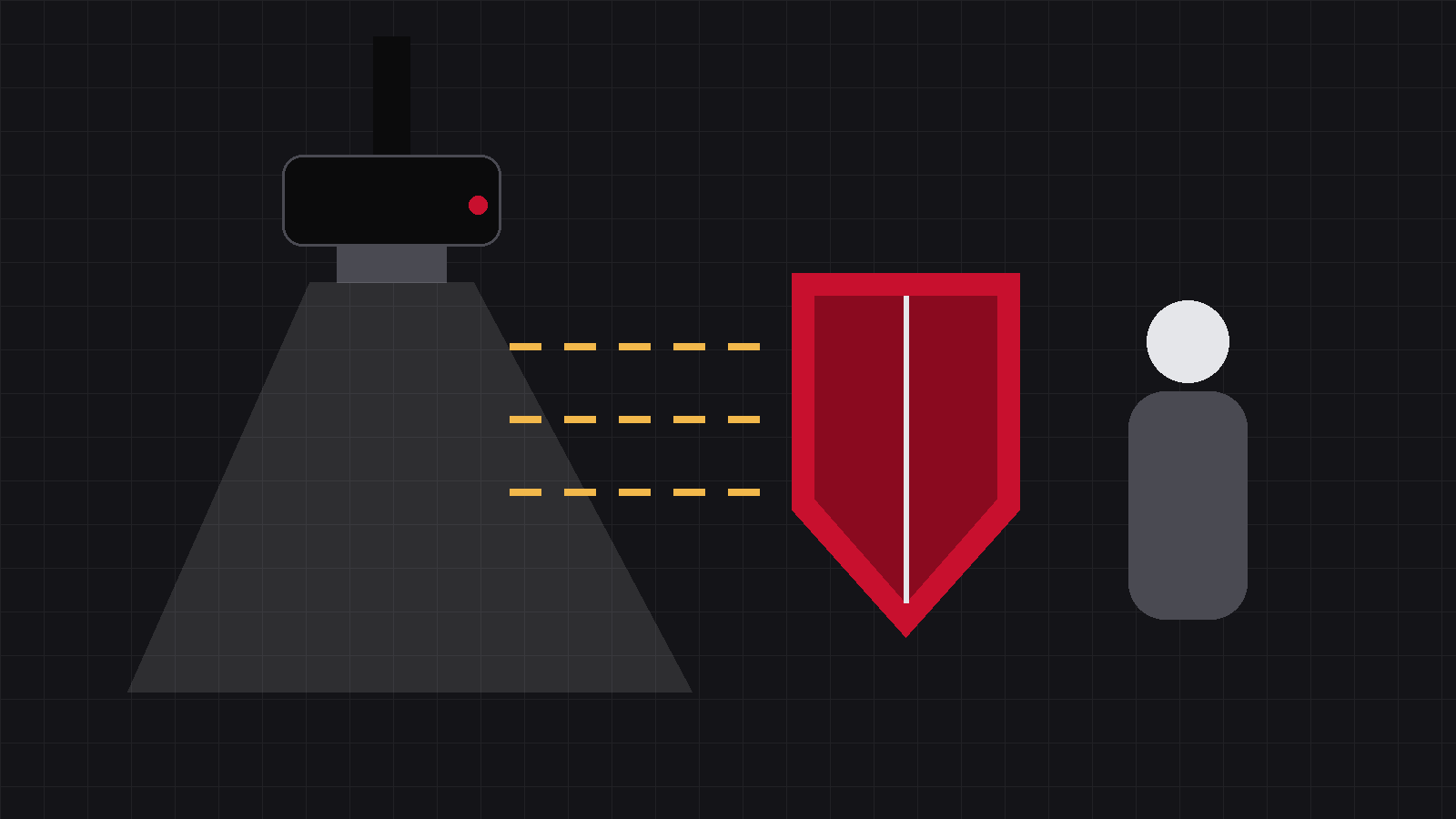
A line that circulates in every X-ray room: “this machine has a short exposure time, so the radiation is lower.” Half of it is true, half of it is not. It is worth taking apart, because once you have, you will know where a short exposure genuinely saves dose — and which question to ask the next time you are evaluating equipment.
01The half that is wrong: dose follows mAs, not seconds
mAs = tube current (mA) × exposure time (seconds). It sets how much radiation this exposure produces in total.
So 100 mA for 0.1 s and 200 mA for 0.05 s are both 10 mAs.
Shorten the time, raise the current, and the dose has not dropped by anything at all. The animal receives exactly what it would have received from the slower, lower-current exposure. As physics, “shorter time equals less radiation” simply does not hold.
Seconds are not dose. mAs is.
When exposure time is offered to you as a dose advantage, there is one more question worth asking: is that at the same mAs? If it is not, what is being compared is speed, not dose.
02The half that is right: short exposures take a different route
Animals are not people. They will not breathe in and hold on command. Within a 0.1 s exposure, one breath or one struggle is enough to blur the image.
A blurred image means a repeat, and a repeat means double the dose for that view — issue 11 worked through that arithmetic.
Deliver the same 10 mAs in 0.05 s and the animal has no time to move, so the first attempt succeeds more often.
Freezing motion is the first problem of small-animal radiography, and a short exposure is the main key to it. For what motion blur actually looks like on a real image, see issue 1 of the artifact atlas series.
03So are short exposures free? No — they have a price
To halve the time at the same mAs, the current has to double. That asks for a high-voltage generator with enough output, and a tube that can take it.
This is what the 32 kW and 50 kW figures on a spec sheet are really about: power does not buy you “less radiation”. It buys you the ability to deliver the same dose in a shorter instant.
A low-power unit is perfectly fine on thin body parts. On something thick — a large dog’s abdomen — it can only reach the required mAs by stretching the time out, and the motion-blur risk comes straight back.
Worth noting in passing: pulsed short exposures combined with noise-reduction processing is the direction the industry is moving in — shorten the time at one end, restore image quality at the other.
04A related myth while we are here: does higher kV mean more radiation?
Not accurate either. kV governs penetration; mAs governs quantity. The two dials do not control the same thing.
In practice, raising kV and lowering mAs to match (the 15% rule covered in issue 2 of the positioning and exposure series) often produces a lower entrance dose.
Exposure factors work as a set. Read any one dial on its own and you will read it wrong — seconds included, kilovolts included.
Ask those few questions and you will learn more about a machine than an afternoon with its spec sheet.
Dose follows mAs, not seconds.
A short exposure does not save this image’s dose — it saves the repeat’s.
Source:The proportional relationship between mAs and dose, and the principles of pairing kV with mAs, are standard imaging physics found in general radiographic technique textbooks; the 15% rule is covered in issue 2 of the positioning and exposure series on this site. The 32 kW and 50 kW figures are examples of generator power classes used across the industry; they do not refer to any particular model and imply no comparison between brands.
IWA Medical · We build DR systems and write our own core software
Questions about veterinary DR imaging? Technical questions go straight to our engineers.