
Can a Pregnant Technician Be in the X-Ray Room?
The answer first: pregnancy does not mean leaving radiography, and it does not mean resigning. International and national rules agree — once the pregnancy is declared, the employer adjusts the working conditions so the dose to the fetus for the rest of the pregnancy stays comparable to that of a member of the public. In a veterinary clinic that comes down to three things: no restraint, out of the room at exposure, role moved up front. Plus the one thing the practice owner should do about it.
 Veterinary imaging · Core software built in-house
Can a Pregnant Technician
Be in the X-Ray Room?
The answer first: being pregnant does not mean leaving radiography, and it certainly does not mean resigning. What it means is a change in who does what — and there are clear rules to lean on, so nobody has to ask for it as a favour.
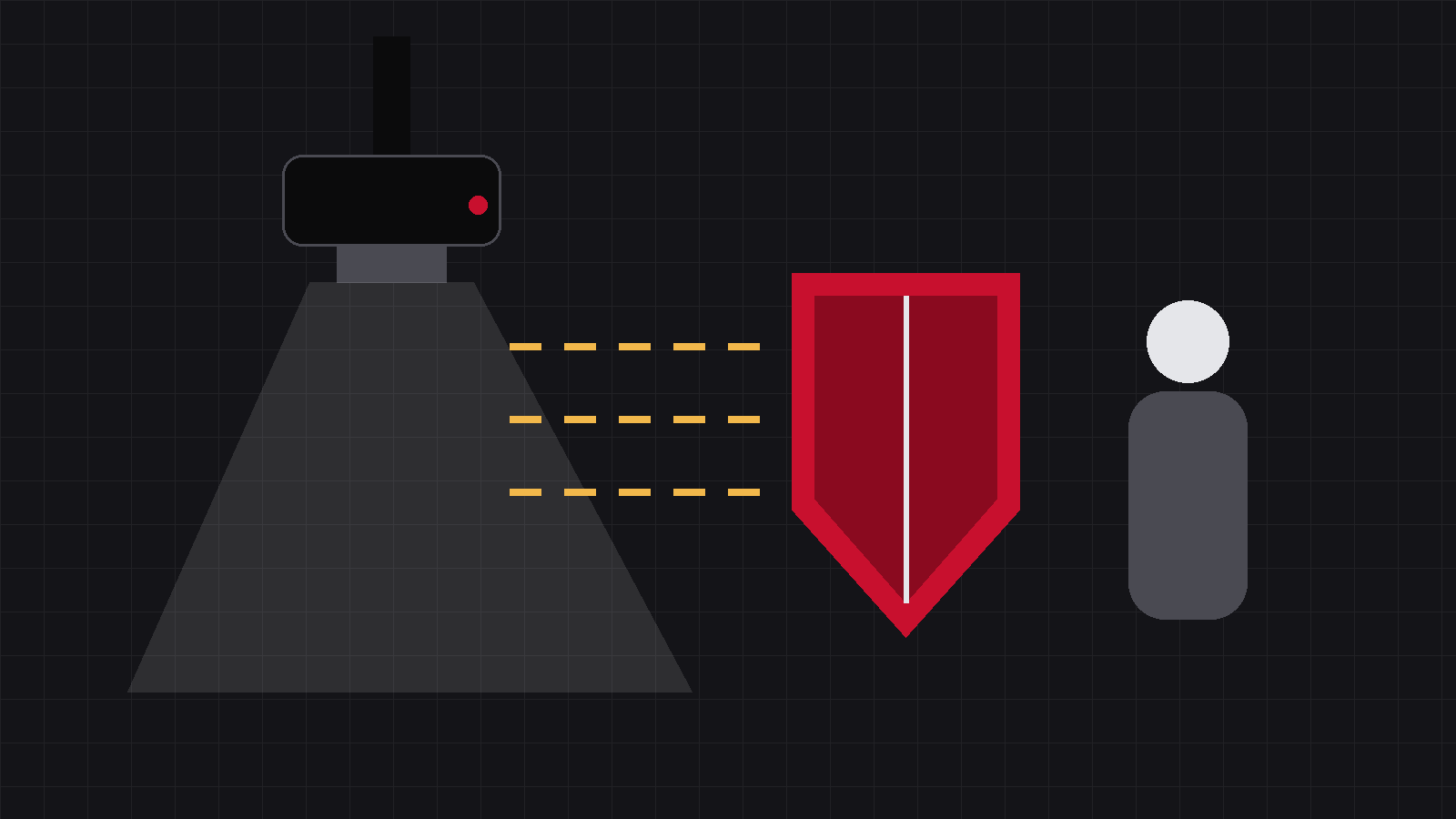
We get this question more often than you would think, and the person asking is usually anxious. Some have just found out and are afraid to tell the practice owner; others told them and were moved out of imaging altogether, which felt like losing something they had worked years for. So let us say it plainly: pregnancy does not mean leaving radiography, and it does not mean resigning. It means adjusting the work — and international and national rules agree on how.
01The rule, in two words
The International Commission on Radiological Protection (ICRP) and the national standards built on the international basic safety standards say the same thing: once a worker declares her pregnancy, the employer should adjust her working conditions so that the dose to the fetus over the remainder of the pregnancy is kept at a level comparable to that of a member of the public — of the order of 1 mSv.
Two words in that sentence carry all the weight.
First: declare
Protection begins when the employer is told, not when the pregnancy begins. So tell them early. It is not an imposition — it is what switches the protection on. People worry that speaking up will get them sidelined, but the rule works the other way round: once you have said it, the employer has an obligation to arrange something. Say nothing, and you simply stay where you were.
Second: adjust
The standards say adjust working conditions. They do not say stop working. What moves is the task list, not the person’s department. Staffing and monitoring details follow your national radiation regulator’s current rules, but the direction — reassign, do not remove — is the same everywhere.
02In a veterinary clinic, that means three things
The standard is written in the abstract. On an actual rota, only three things change.
① No manual restraint
Issue 8 made the case: the person holding the animal takes more dose than anyone else in the building — hands closest to the beam, and the most exposures per day of anyone. This is the first duty to hand over, and it is not negotiable.
② Not in the room at the moment of exposure
Note the wording. It is not “stay out of the X-ray room”; it is “not in there when the exposure happens”. Positioning, settling the animal, placing the foam wedges — all of that can carry on as usual. Step out and close the door before the switch is pressed. That is the whole requirement.
Why can it be that clean a cut? Because, as issue 1 explained, an X-ray tube is a switch, not a battery. Between exposures there is nothing in it. The room is an ordinary room; walking in and out is fine, and nothing lingers in the walls, the table or the animal.
③ Move the role up front
Reception, records, ultrasound, lab work, post-operative care — a clinic is full of work that never goes near a beam. The common arrangement is simple: swap roles for the pregnancy, swap back after maternity leave. Same person, same skills, nothing lost.
03Why this is genuinely reassuring
Because the arithmetic works out.
Issue 7 covered a fact that surprises most people: in a clinic that works to normal good practice, the yearly reading on a radiography staff member’s personal dosimeter often comes back close to background. The occupational increment is already small enough that it takes an instrument to separate it out.
Start from there, then make the three adjustments above — no restraint, out of the room at exposure — and the remaining pathways essentially close.
The global average from natural background. Nobody avoids it, whatever they do for a living. The occupational increment after these adjustments is far below it — and the level the standards ask you to hold the fetal dose to (comparable to a member of the public, of the order of 1 mSv) is that same order of magnitude.
So the real answer to “can she go in the room” is neither yes nor no. It is: not in there during the exposure; everything else as usual.
04One thing for the practice owner
Write those three lines into your policy, so that no pregnant member of staff has to campaign for them.
Why it matters: if it has to be negotiated, someone must find the courage to raise it, then read the room on a busy day — so plenty of people put it off, or never say anything at all, and the protection is late by exactly that much. In a staff handbook it is settled in advance. Everyone gets the same arrangement, and nobody has to ask.
Safe to tell you early, and something already arranged when they do
That is worth more than most staff benefits — and it is how you keep experienced people. A radiographer you spent two years training, lost because nobody arranged anything, is the clinic’s loss. Writing three lines on paper costs nothing.
Ten minutes of writing. For someone who is currently lying awake about it, an entirely different pregnancy.
Pregnancy does not mean leaving imaging. It means three adjustments:
no restraint, out of the room at exposure, role moved up front.
Source:Once pregnancy is declared, the employer should adjust working conditions so that the dose to the fetus over the remainder of the pregnancy is comparable to that of a member of the public — ICRP Publication 103 (2007); national regulations implementing the international basic safety standards carry the same requirement. Natural background of about 2.4 mSv per year is the global average. Staffing and monitoring arrangements follow your national radiation regulator’s current rules. This article is educational and does not replace individual advice from occupational health or an obstetrician.
IWA Medical · We build DR systems and write our own core software
Questions about veterinary DR imaging? Technical questions go straight to our engineers.