
What Is Radiation, Really? From Sunlight to X-rays, Explained Once
Radiation comes in two families — which one are X-rays in? Why are they a “switch”, not a “battery”? And how to answer “is there radiation?” in three sentences.
 Veterinary imaging · Core software built in-house
What Is Radiation, Really?
From Sunlight to X-rays, Explained Once
Radiation comes in two families — which one are X-rays in? Why are they a “switch”, not a “battery”? And how to answer “is there radiation?” in three sentences.
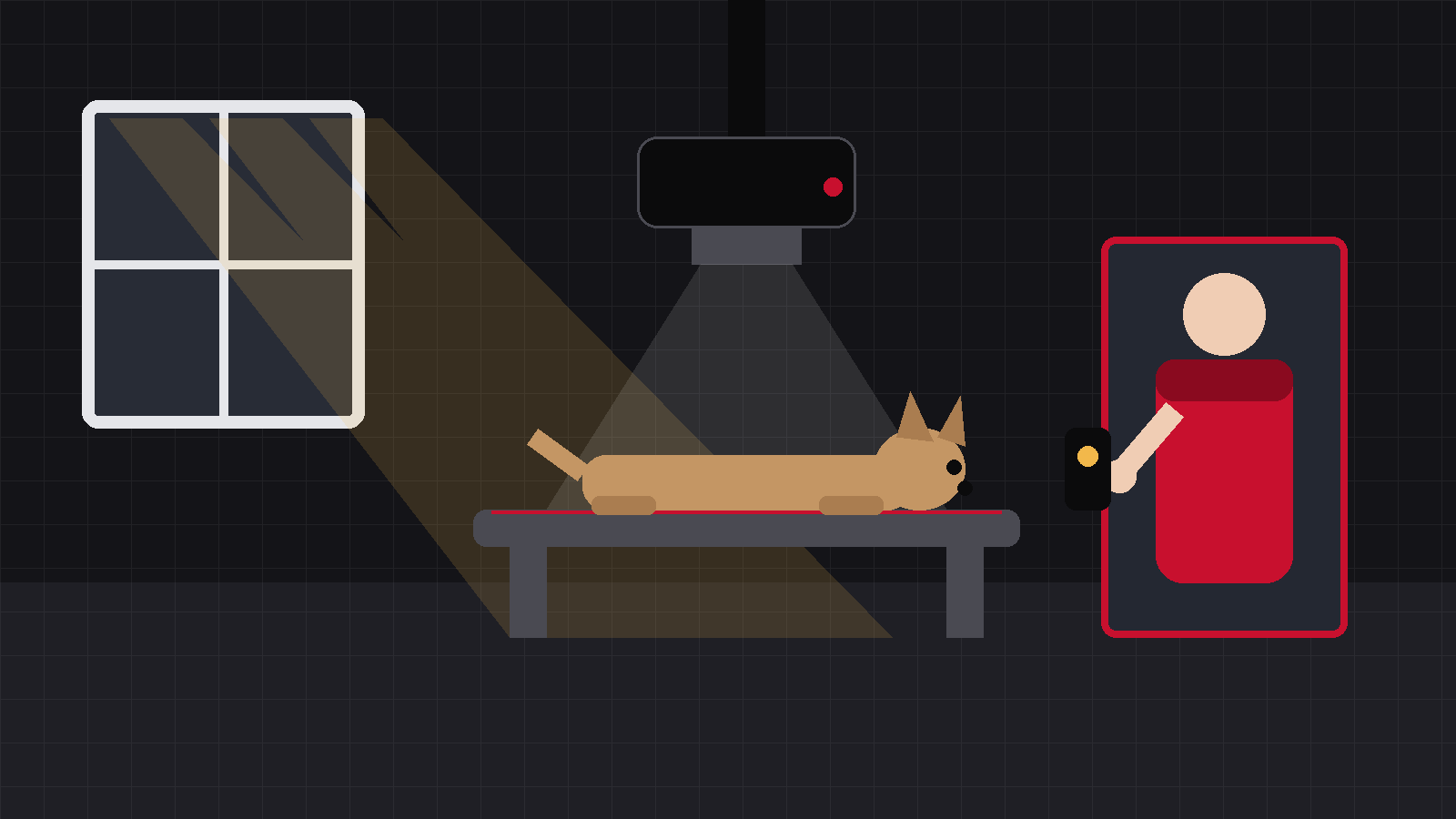
The question every front desk hears: “Doctor, is there radiation in an X-ray? Will it hurt my dog?” Many people tense up at the word “radiation”. Yet we are soaked in radiation every day — sunlight is radiation, your phone signal is radiation, so is the microwave oven. The question is not whether there is radiation, but which kind.
01Radiation is simply energy travelling
By how much energy it carries, radiation falls into two families:
Non-ionizing radiation
Low energy. When it meets the body, all it can do is make molecules “jiggle” and warm up a little. The warmth you feel in the sun is this family at work.
Ionizing radiation
Energy high enough to knock electrons straight out of atoms (“ionization”) and change molecular structure. When people say “radiation is harmful”, this is the family they mean.
02Two features of X-rays that are easy to overlook
X-rays are a switch, not a battery
X-rays are produced only in the instant the tube is energised and electrons strike the target. Release the hand switch and they are gone. Switch the machine off and nothing remains in the room; an animal does not “carry radiation” home after its radiograph. This is fundamentally different from nuclear medicine, where a radioactive drug that keeps emitting is placed inside the body. An X-ray unit is not that.
Feature 2: X-rays can be calculated, shielded and distanced
Ionizing radiation is invisible and intangible, yet it is the most “reasonable” thing there is: dose can be measured, penetration can be calculated, it weakens with distance, and a sheet of lead stops it. Later articles in this series will cover, one at a time, how to calculate, how to shield and how to keep your distance.
03As for “how much”
Even without any X-rays, every person on Earth receives natural background radiation — from space, from soil and rock, from radon in the air. The United Nations Scientific Committee on the Effects of Atomic Radiation (UNSCEAR) puts the global average at:
Worldwide average natural background dose. That number is the ruler for every comparison that follows — how many days of natural background one radiograph equals, we will measure with this ruler in the next article.
A clear explanation is far more convincing than a vague “it’s fine, it’s fine”.
X-rays are a switch, not a battery.
On when pressed, gone when released.
Source:Natural background ≈ 2.4 mSv/year — UNSCEAR 2008 Report, worldwide average annual effective dose (typical range about 1–13 mSv by region).
IWA Medical · We build DR systems and write our own core software
Questions about veterinary DR imaging? Technical questions go straight to our engineers.