Lead Apron: 0.35 or 0.5 mmPb?
0.25, 0.35, 0.5 — is a bigger number simply better? No. Those three figures describe three situations, not three quality grades. Going from 0.35 to 0.5 buys you roughly what one step backwards buys you, while taking your hands out of the beam is worth orders of magnitude. Here is how to choose by situation, and when 0.5 really is the right answer.
 Veterinary imaging · Core software built in-house
Lead Apron: 0.35 or 0.5?
0.25, 0.35, 0.5 — is a bigger number simply better? No. Those three figures describe three situations, not three quality grades. Which one you need comes down to a single question: where do you stand during an exposure, and for how long?
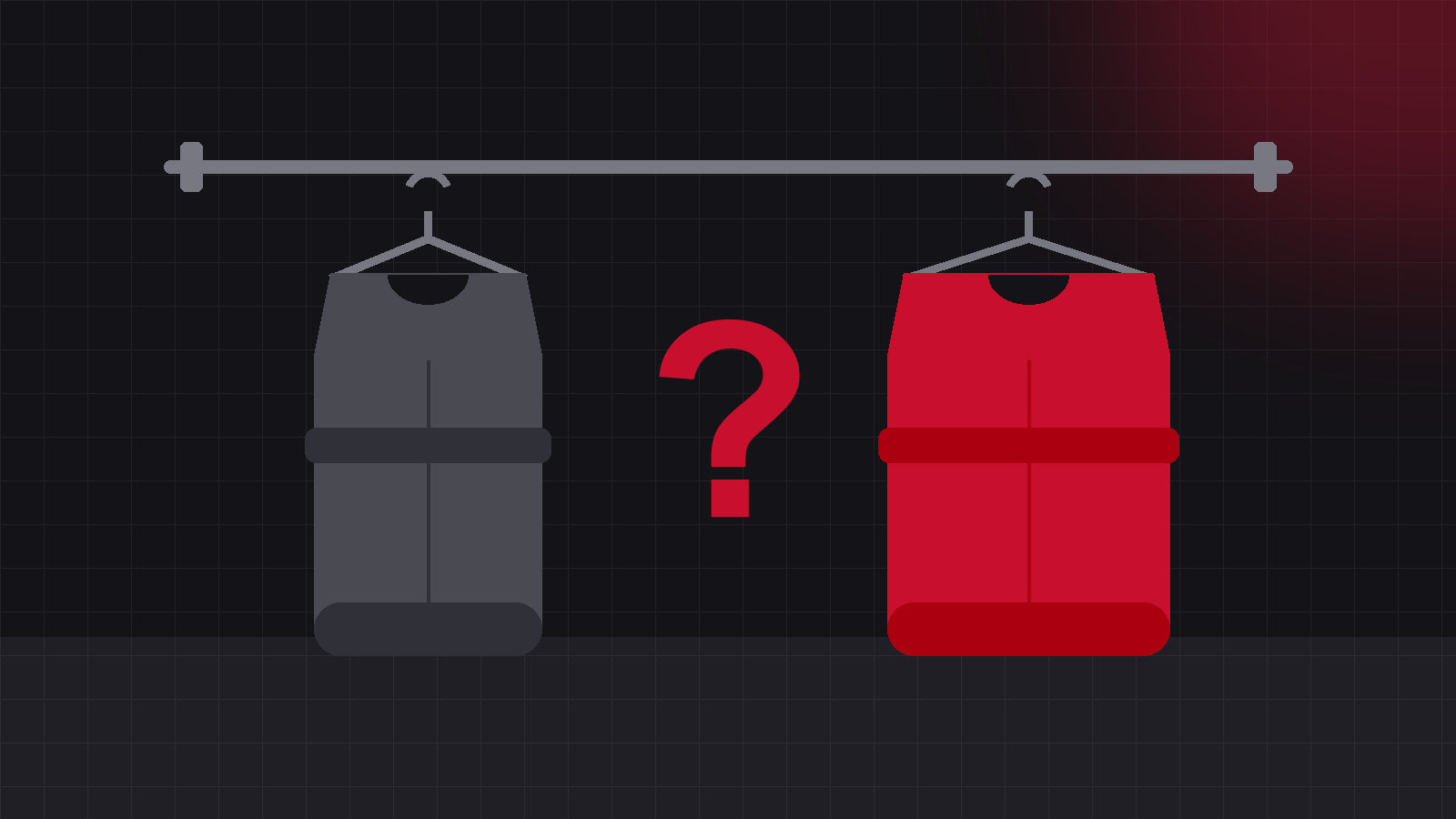
A new clinic is buying protective gear. The supplier quotes three grades — 0.25, 0.35, 0.5 — at rising prices, and the obvious question follows: “We should just buy the thickest, right?” Or the other version: the apron arrives, the label says 0.35, a quick search turns up 0.5, and the doubt sets in — did we get short-changed? The short answer: those three numbers describe three situations, not three grades.
01First, what 0.35 mmPb actually means
It does not mean “this garment contains 0.35 mm of lead”. It means “it stops as much radiation as 0.35 mm of lead would”. The quantity is called lead equivalence, written mmPb.
Why the detour? Because many modern aprons contain no lead at all. They use composites of barium, antimony or tungsten, which deliver the same protection at a lower weight. For such a garment, measuring its thickness or putting it on a scale tells you nothing — lead equivalence is the only figure you can compare across products.
One detail that rarely gets mentioned: lead equivalence is measured at a particular tube voltage. The same apron behaves differently at 60 kV and at 100 kV — higher-energy photons are harder to stop. So the number on the label is a reference value, not a constant that holds everywhere.
02So how much is between 0.35 and 0.5?
At the seventy-to-eighty kV used in most veterinary clinics, both stop the large majority of the beam; 0.5 stops a little more on top of that.
The useful question is not “how much more”, but: how much is that little bit worth?
Convert it into something you do every day and it becomes obvious — going from 0.35 to 0.5 buys you roughly what one step backwards buys you. That is not a figure of speech, it is arithmetic. Radiation follows the inverse-square law: double the distance and the dose falls to a quarter. Half a step back and you have the extra protection for free.
Technique matters far more than gear
If any part of a hand or arm is inside the collimated field, it is not receiving scatter — it is receiving the primary beam, and the two differ by orders of magnitude. An apron does not cover hands anyway. Taking your hands out of the field is worth far more than upgrading to a thicker apron.
03Why the two are treated as separate grades
Standard radiation-protection practice sets different requirements for plain radiography and for interventional fluoroscopy, with the latter asking for more. That split is not arbitrary — look at the two situations side by side:
One press and it’s over
Position the patient, step away, press the switch, and the exposure is over in tens of milliseconds. Across a day of dozens of images, the time any one person actually spends in the radiation field may add up to under a minute.
Standing beside it for half an hour
The operator stands next to the machine with their hands on the patient while the beam runs continuously, for tens of minutes per procedure.
The gap between the two is not marginal — it is a difference of two or three orders of magnitude in cumulative exposure time. Of course the requirements differ.
04Weight matters more than you think
In the same model, a full 0.5 apron is appreciably heavier than the 0.35. That sounds like a detail — but the weight hangs off your shoulders and lower back, and by lunchtime your back will have an opinion. The musculoskeletal load of wearing an apron for hours is a genuine issue in radiology work, not a complaint.
And the truly damaging part is what comes next: too heavy, and it stops being worn.
An apron hanging on the wall protects nobody
A 0.35 you are happy to wear all day beats a 0.5 you want to take off after an hour. When choosing protective gear, “will it actually be worn” is as hard a specification as lead equivalence.
05When 0.5 really is the right answer
None of the above says 0.5 is pointless. In these situations it is exactly what you want:
① Fluoroscopy and dynamic DR
The beam runs continuously and people stand beside it for minutes, not milliseconds. Different situation, different grade.
② Repeated intra-operative imaging and C-arm work
Many exposures within one procedure, and nobody can step away.
③ Large animals and equine work
Restraint and positioning often make stepping back impossible; people stay close for long stretches.
④ Your local authority or inspection body requires more
This one overrides everything above. Follow the local requirement rather than your own judgement.
The earlier article Lead apron, thyroid collar, lead glasses: which first? covered what to buy in what order; this one covers how thick. Together they come to one sentence: buy the right items, then pick the thickness — and both of those rank below keeping your hands out of the beam.
The worst way to buy protective gear is by picking the biggest number and then leaving it on a hook. Choose for your situation, and choose something people will actually keep on.
0.35 versus 0.5 is one step of distance.
Hands in or out of the beam is orders of magnitude.
Source:The inverse-square law is a law of physics. Apron transmission varies with tube voltage and lead equivalence, and the gap between primary beam and scatter varies with exposure conditions; this article keeps both strictly qualitative and quotes no ratios. Select lead equivalence according to your local radiation-protection requirements and the advice of your inspection body. This article evaluates no apron brand and is not a compliance judgement.
IWA Medical · We build DR systems and write our own core software
Questions about veterinary DR imaging? Technical questions go straight to our engineers.
[…] have met this term before: issue 20, on choosing a 0.35 or 0.5 apron, uses exactly the same quantity. Only the question changes — on […]