
Gy, Sv, mSv: What Actually Separates Them
A survey report shifts between μGy, mSv and μSv/h and looks like three separate systems. It is not: there are two units and one conversion. The gray is physics and is measured; the sievert is about people and is calculated — and since the radiation weighting factor for X-rays is 1, the two figures line up. Add the steps of a thousand, two everyday reference points, and the rule that a slash means a dose rate, and the table becomes readable.
 Veterinary imaging · Core software built in-house
Gy, Sv, mSv
What Actually Separates Them
A radiation survey report lands on your desk and the units keep changing — μGy here, mSv there, μSv/h somewhere else. Which number are you supposed to read? In practice there are only two units and one conversion; everything else is a variation on those.
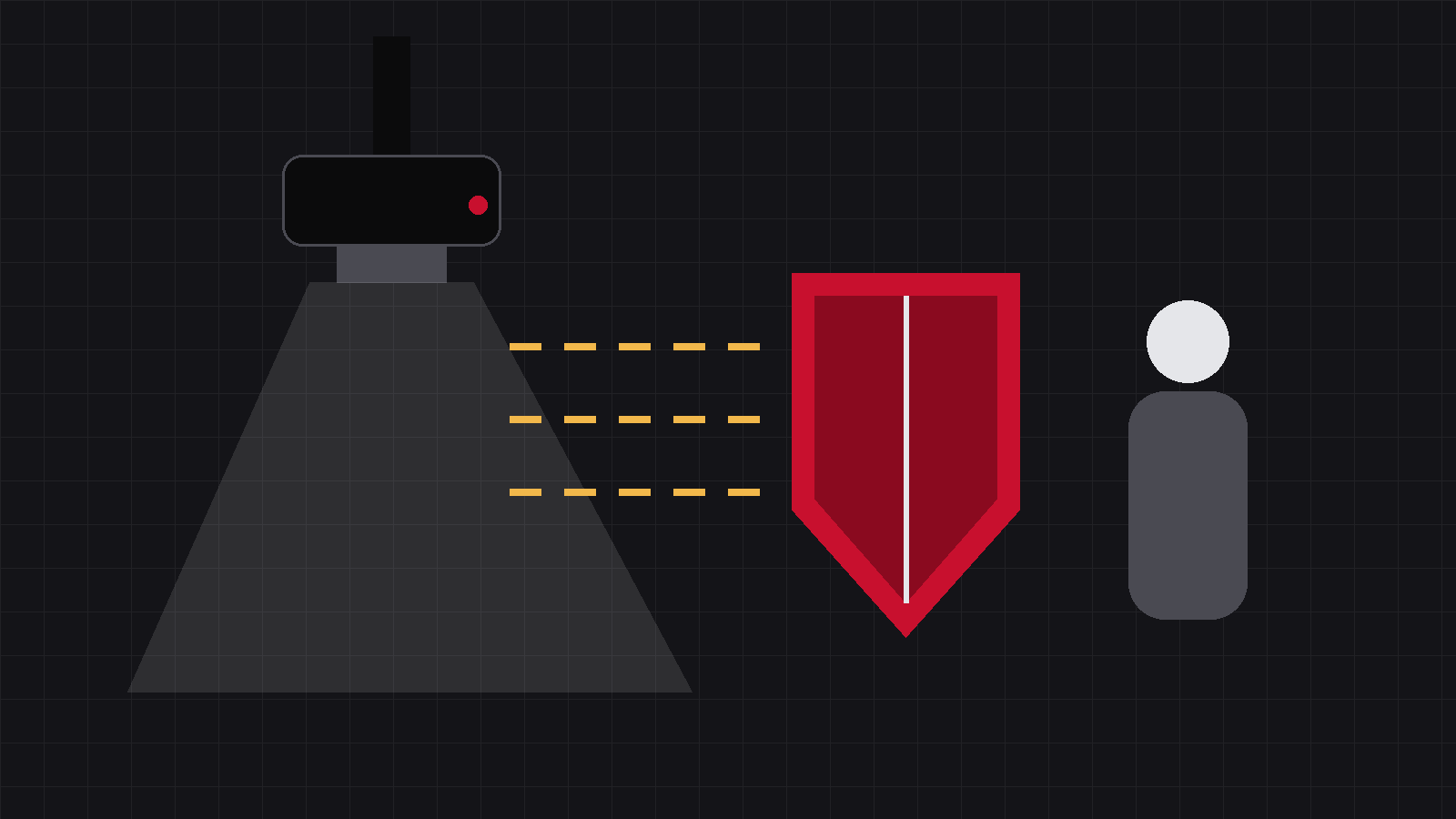
Survey reports, equipment manuals, radiation-safety slide decks — the units shift from line to line: μGy, mSv, μSv/h. It looks like three separate systems. It is not. There are two units, plus one conversion. Once you know which question each of them answers, the table stops being intimidating.
01Two units, two different jobs
Gy (gray): how much energy was absorbed
This is pure physics. One kilogram of tissue absorbing one joule of radiation energy is one gray. It is what an instrument actually measures — regardless of what kind of radiation it is, who it landed on, or which organ it passed through.
Sv (sievert): how much harm it does to a person
The same amount of energy does different amounts of damage depending on the type of radiation and the organ it reaches. The sievert takes the gray figure and multiplies it by a weighting for the type of radiation and a weighting for the sensitivity of the tissue.
So the fundamental difference is this: the gray is measured, the sievert is calculated. Gy states a physical fact; Sv answers the question “what does that mean for a person?”
For X-rays, the radiation weighting factor is 1
Which means that in X-ray work, 1 Gy and 1 Sv come out to essentially the same number — no mental arithmetic required. The heavily weighted radiations, neutrons and alpha particles, simply do not occur in a veterinary clinic. (Weighting factors are set out in ICRP Publication 103.)
02One conversion: steps of a thousand
1 Sv = 1,000 mSv (millisievert) = 1,000,000 μSv (microsievert). The sievert itself is far too large to meet in daily work; what you actually see is the milli and micro levels.
The worldwide average dose from natural background radiation — what you receive for doing nothing at all. The other handy anchor is a human chest X-ray at roughly 0.1 mSv, which is 100 μSv. Those two numbers are your ruler.
Check whether the prefix is m or μ — that is a factor of 1000
0.1 mSv and 0.1 μSv differ by a single letter on the page and by a thousandfold in reality. When you see a number in sieverts, read the prefix before you read the digits.
03The ones with a slash are dose rates
There is a third style on the report: μGy/h, μSv/h. A slash means a dose rate — “how much per hour”. It describes how strong a particular spot is, not how much any particular person received.
The relationship is the one between speed and distance. Dose rate is the speed; dose is the distance covered. Standing in the same spot for an hour and for ten minutes are not remotely the same thing — a dose rate only becomes a dose once you multiply it by the time you spend there.
This is the unit an inspection body uses when it measures leakage radiation outside the X-ray room. They walk the instrument along the door seam, the viewing window and the walls, and the reading in μSv/h answers one question: how much would somebody standing here for an hour receive?
Dose
mSv, μSv, mGy. The total accumulated over some period — a quarter, an exposure, a year.
Dose rate
μSv/h, μGy/h. How strong this spot is right now, independent of anyone. Multiply by time yourself.
The same distinction sorts out the two instruments. Issue 7 covered them: a personal dosimeter monitors a person — you wear it, and at the end of a quarter it tells you your total, in mSv. A survey meter monitors a place — you hold it and read it on the spot, in μSv/h. One gives a dose, the other gives a dose rate. Similar names, similar looks, completely different jobs.
04Back to that survey report
With all of the above, reading the report comes down to three moves:
① Look for a slash after the unit
With a slash it is a dose rate (how strong a location is); without one it is a dose (a total accumulated over time). This step alone tells you what the number is talking about.
② Then read the prefix, m or μ
A factor of a thousand, and the single most common misreading. Get it right before you judge whether the figure is large or small.
③ Do not bother converting Gy to Sv
Under X-ray conditions the two numbers are equivalent, so when the report says μGy/h on one line and μSv/h on the next, you can read them as the same order of magnitude.
Once the units make sense, there is one more useful step: translating the numbers into something people can feel. That is what issue 2 does — expressing the dose of a single radiograph as “so many days of natural background” for a worried owner. Units are the ruler; the comparison is what you actually say out loud.
Once the table makes sense, the next annual inspection stops being a black box: you know what the instrument in the inspector’s hand is measuring, what the reading means, and what their conclusion is based on.
Gy is physics, Sv is people, and under X-rays the two figures match.
A slash means a dose rate — and m versus μ is a factor of a thousand.
Source:Radiation weighting factors (1 for X- and gamma rays) and tissue weighting factors are given in ICRP Publication 103 (2007); the worldwide average natural background is about 2.4 mSv per year (UNSCEAR); an adult chest radiograph is roughly 0.1 mSv (RadiologyInfo.org, ACR/RSNA). Actual doses vary with equipment, technique and the individual, so the figures here are orders of magnitude for reference only and are not a compliance judgement.
IWA Medical · We build DR systems and write our own core software
Questions about veterinary DR imaging? Technical questions go straight to our engineers.