
The Person Restraining the Animal Gets the Most Dose in the Clinic
Most people assume it's whoever presses the switch. Wrong — closest to the scatter, hands nearest the beam, present for every image. Radiation protection starts with the restrainer.
 Veterinary imaging · Core software built in-house
The Person Restraining the Animal
Gets the Most Dose in the Clinic
Most people assume it’s whoever presses the exposure switch. Wrong — closest to the scatter source, hands nearest the beam, present for every single image: for the restrainer, all three rules run in reverse.
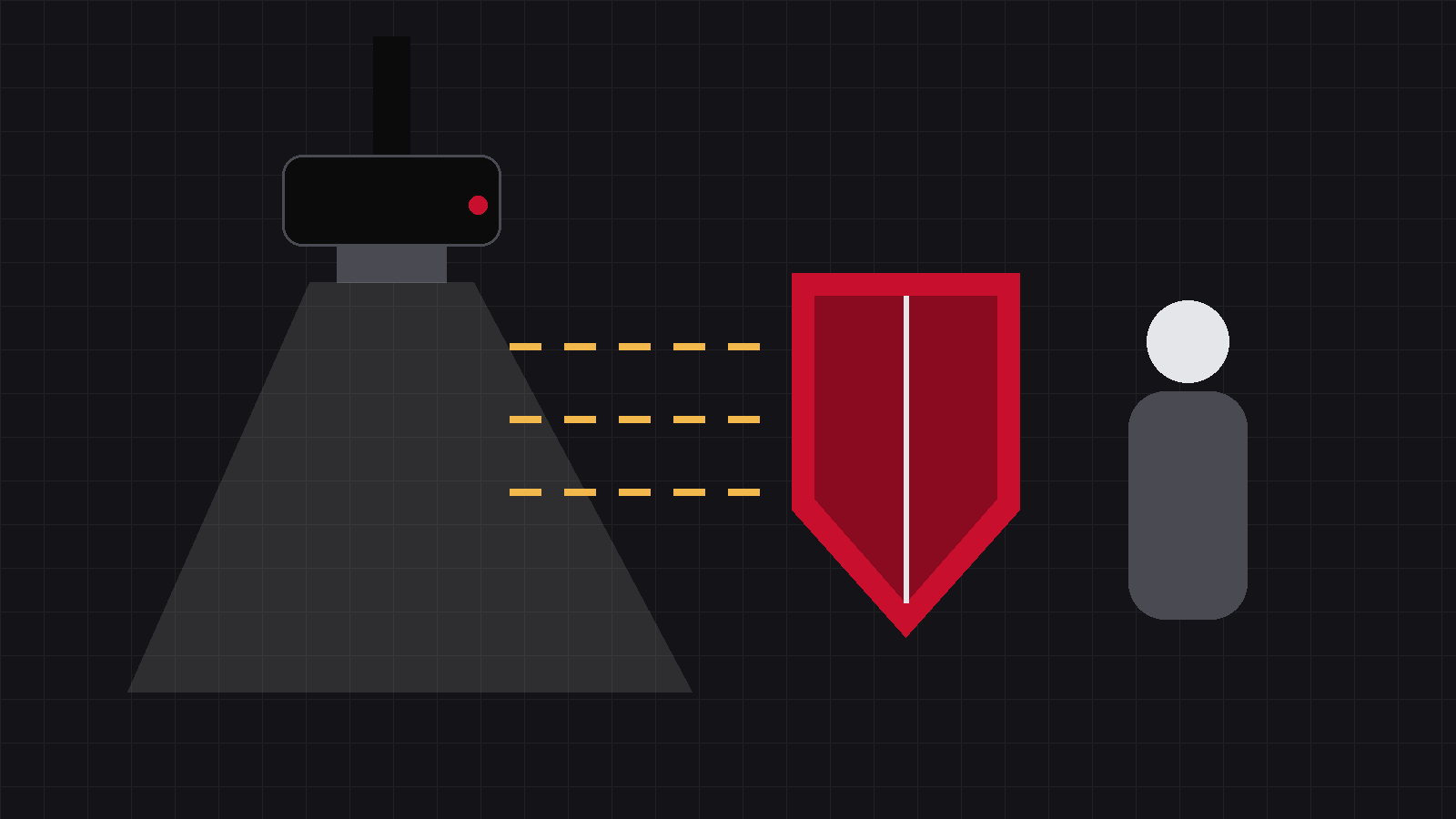
A question: who in your clinic receives the most radiation? Most people say “the one pressing the switch”. Wrong. That person stands two metres back, usually in a lead apron. The one who truly gets the most is the person leaning over the table, both hands on the animal.
01All three rules run in reverse on this person
The rules from earlier articles — dose falls with the square of distance, primary beam and scatter differ by about a thousandfold, dose accumulates with every exposure — all turn against the restrainer:
Hit by all three
Closest to the scatter source (zero distance — the inverse-square law works fully against them); hands most likely to slip into the edge of the beam; and present for every single image — however many are taken, that’s how many times they’re there.
Avoids all three
Stands two metres back, so distance does the first job; hands never near the field; often behind a shield or in a lead apron as well.
One person can outweigh the rest of the clinic combined
If restraint always falls to the same assistant, their dose over a year can exceed everyone else in the clinic put together. This is not scaremongering; it is the point: radiation protection should centre not on the person at the switch, but on the person doing the restraining.
02What you can do, ranked by effect
① If a device can hold it, don’t use a person
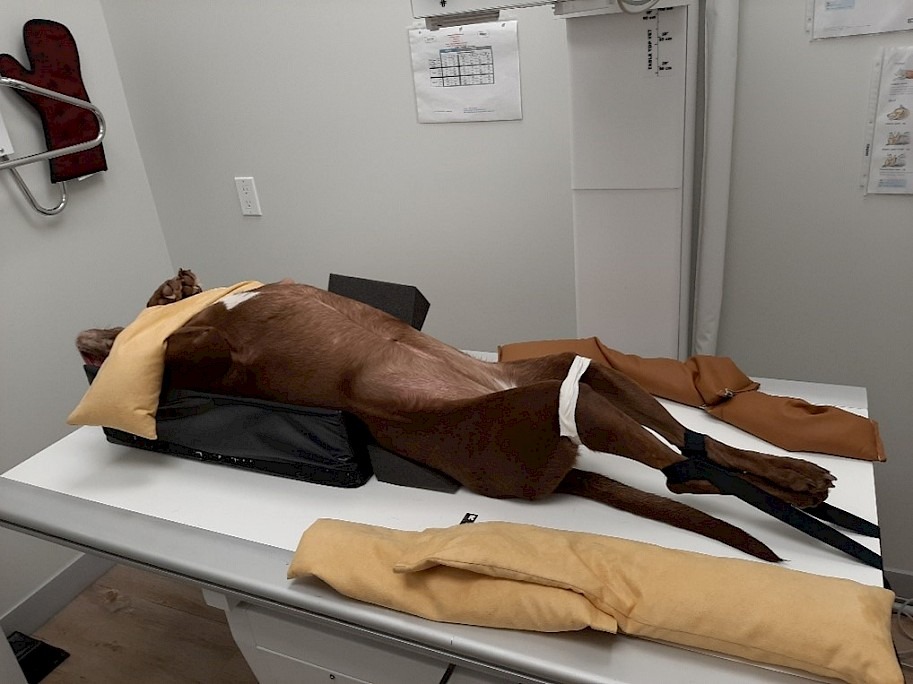
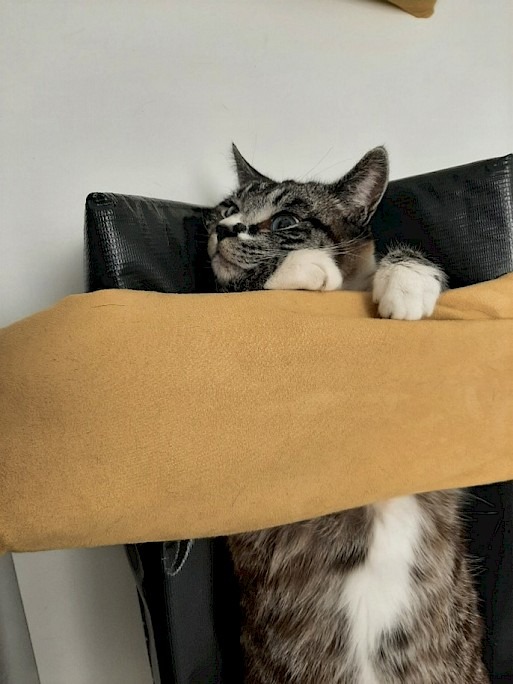
Sandbags, foam troughs, V-troughs, straps, tape, positioning frames — they are cheap, immune to radiation, never tire, and never flinch at the instant of exposure. Many standard views, such as the extended-hip view or the lateral spine, were meant to be done with positioning aids rather than hands in the first place.
② Sedate when sedation is indicated
A struggling animal takes two people to hold and three attempts to image; sedated, one person positions it and one exposure succeeds. On the full account, that one injection buys the animal two fewer exposures, the staff two fewer exposures, and a better image. “Saving on sedation” is the most expensive saving there is.
③ Rotate
Don’t let the same person restrain every day. Dose accumulates — shared across three people, everyone stays within a safe margin.
④ Wear everything that should be worn
The restrainer is the person who most needs the lead apron, the thyroid collar and — depending on caseload — lead glasses. Keep hands out of the field, and use aids to extend your “hands”.
⑤ Wear a personal dosimeter
Restraint is the role that most deserves a personal dosimeter — not to satisfy an inspection, but to turn “who gets the most” from a feeling into a number. Once the number exists, the four points above start being taken seriously.
03A word about the machine
Making restraint need fewer hands and exposures shorter is also the equipment’s responsibility. The shorter the exposure, the less the animal can move and the less the restrainer has to clamp down; the more forgiving the image processing, the higher the first-shot success rate and the fewer the retakes. These are not selling points — they are basics.
If the aids are out of reach, someone’s hands go in; if they are at hand, many “manual holds” never need to happen at all.
The closest person gets the most dose.
Sandbags instead of hands; rotation instead of one person.
Source:This is practical protection guidance with no external figures cited; personal dosimetry and staffing requirements follow the current regulations of your local radiation-safety authority.
IWA Medical · We build DR systems and write our own core software
Questions about veterinary DR imaging? Technical questions go straight to our engineers.
[…] Issue 8 made the case: the person holding the animal takes more dose than anyone else in the building — hands closest to the beam, and the most exposures per day of anyone. This is the first duty to hand over, and it is not negotiable. […]