
Your Lead Apron May Already Have Failed
When a lead apron fails you cannot see it from the outside — the fabric looks perfect while the lead rubber inside has split. Checking it costs nothing: lay it flat and image it on your own DR system. On the radiograph, look for anything that is not uniform: a split leaving a gap reads darker, material bunched at a torn edge reads brighter, and both are cracks. Here is how to take the image, how to read it, when to replace, and three habits that make aprons last.
 Veterinary imaging · Core software built in-house
Your Lead Apron
May Already Have Failed
How old is the lead apron in your clinic, and has anyone ever checked it? For most clinics the answer is no on both counts. And a lead apron has one dangerous property: when it fails, you cannot see it from the outside.
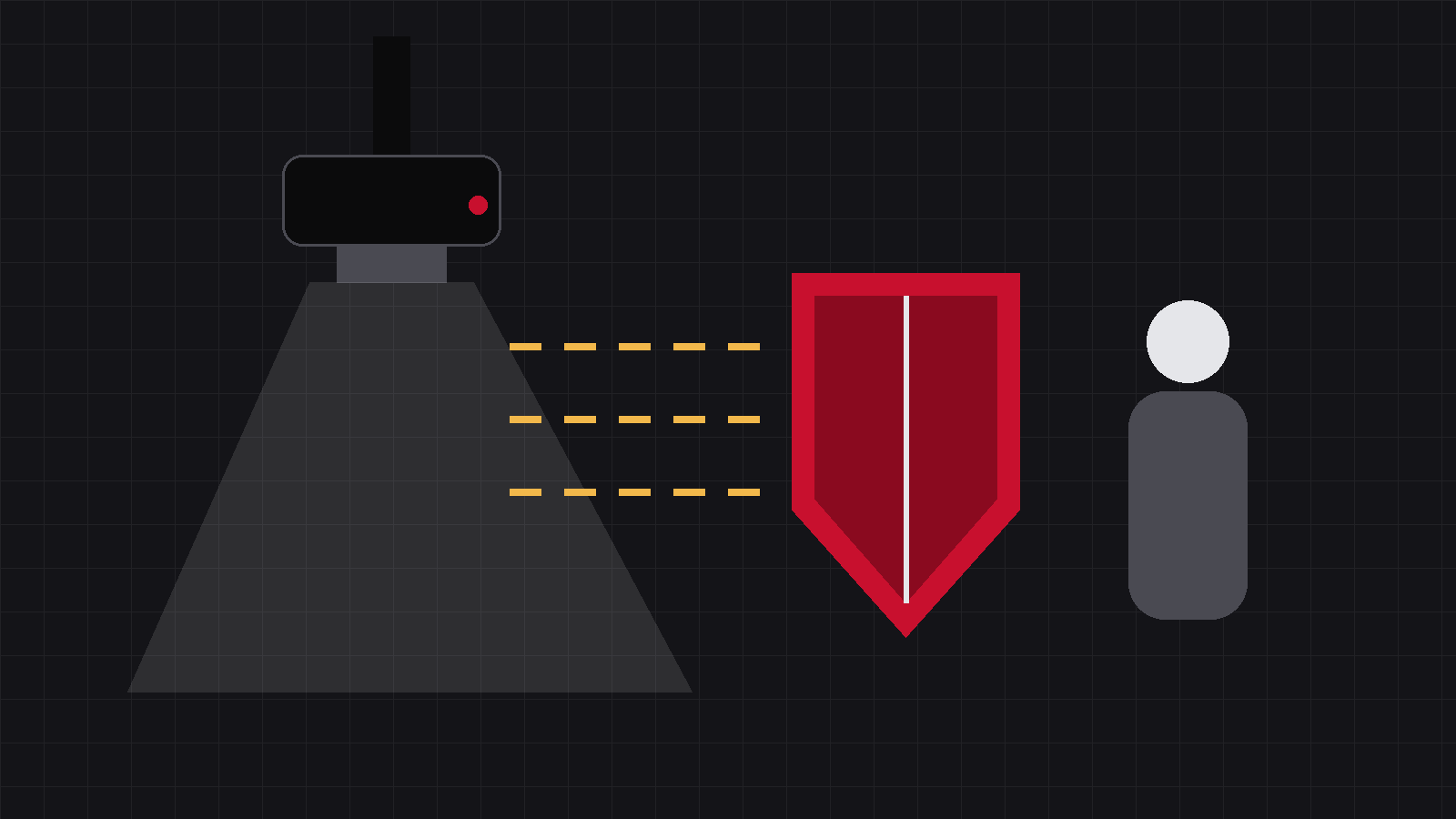
One question: how old is that lead apron of yours, and has anyone ever checked it? For most clinics the answer is that nobody has, and nobody knows how. Which matters, because a lead apron has one dangerous property: when it fails, you cannot see it from the outside. The outer fabric looks perfect while the lead rubber inside has already split.
01Why aprons fail
What stops the radiation inside is not a sheet of lead. It is lead-loaded rubber or a composite: soft, flexible — and intolerant of being folded.
Every time it is slung over a chair back, folded into a cupboard, or sat down in, the material takes a small injury along that crease. Over a few years creases become cracks, and at a crack the protection is zero — while from the outside you cannot feel a thing.
A cracked apron is worse than no apron
Someone without an apron knows they are unprotected and keeps their distance. Someone wearing a cracked one believes they are covered.
02How to check: your own DR system is the tester
This costs nothing and needs nobody. Lay the apron flat on the table and take an image of it using the sort of technique you would use for a thin body part — a large apron in two or three overlapping exposures so that all of it is covered.
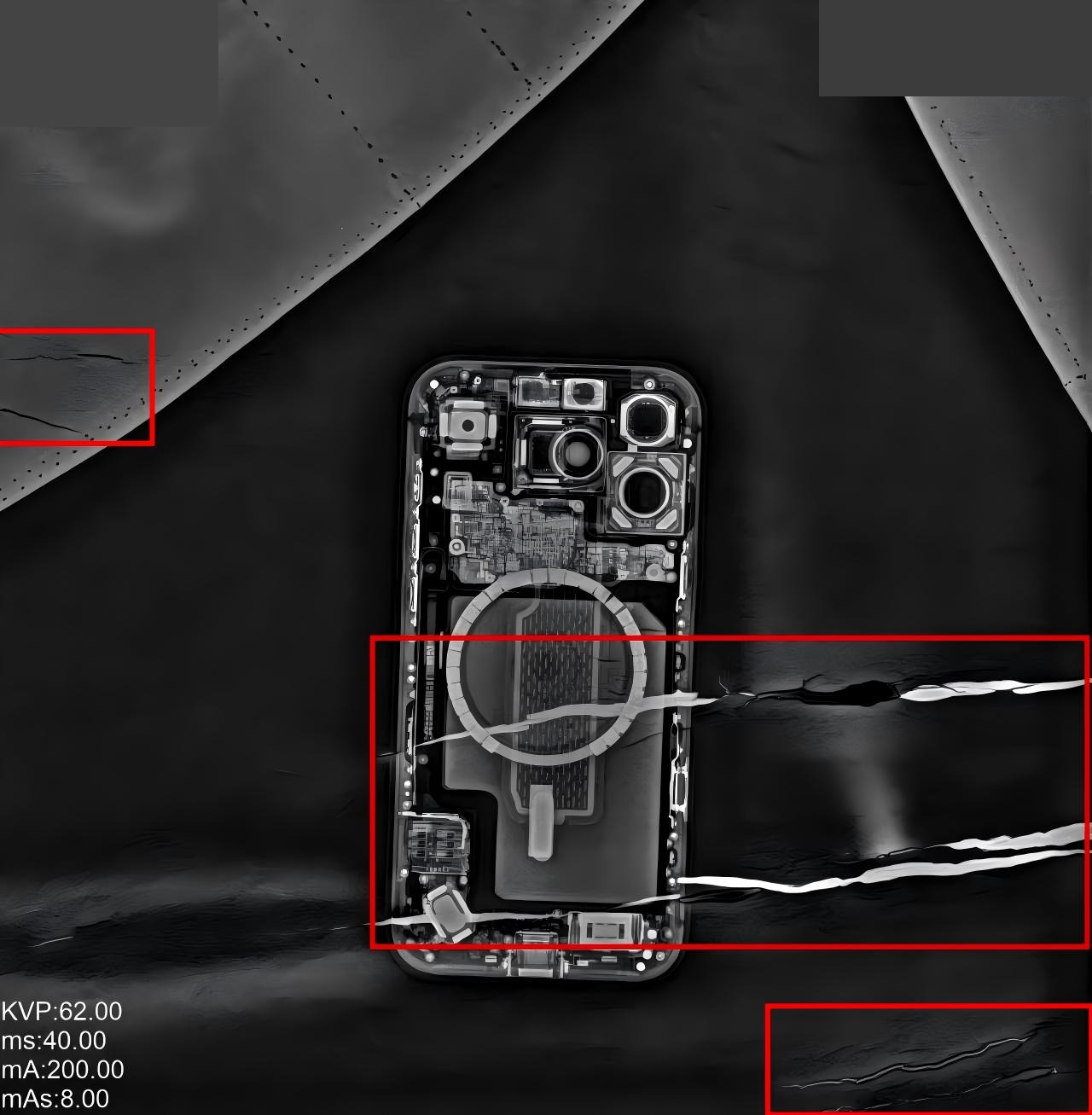
How to read it? One rule: look for anything that is not uniform.
A sound apron images as an even pale field — the beam is being stopped, so there is little signal. Anything that breaks that evenness — a line, a streak, a patch — is worth stopping on.
And here is the part that catches people out: cracks appear in two opposite ways.
A split that leaves a gap
Along that line there is less lead, radiation leaks through the gap, the detector receives a stronger signal, and the line renders darker than its surroundings.
Material bunched at the torn edge
Once the lead rubber tears, the edges curl and overlap. That line becomes locally thicker, stops more radiation, and renders brighter than its surroundings.
So the test is neither “dark” nor “bright” — it is “this area differs from the one next to it”. A winding thread, whichever way it runs, means the material there is no longer continuous. A mottled patch means lead rubber that has aged and broken down.
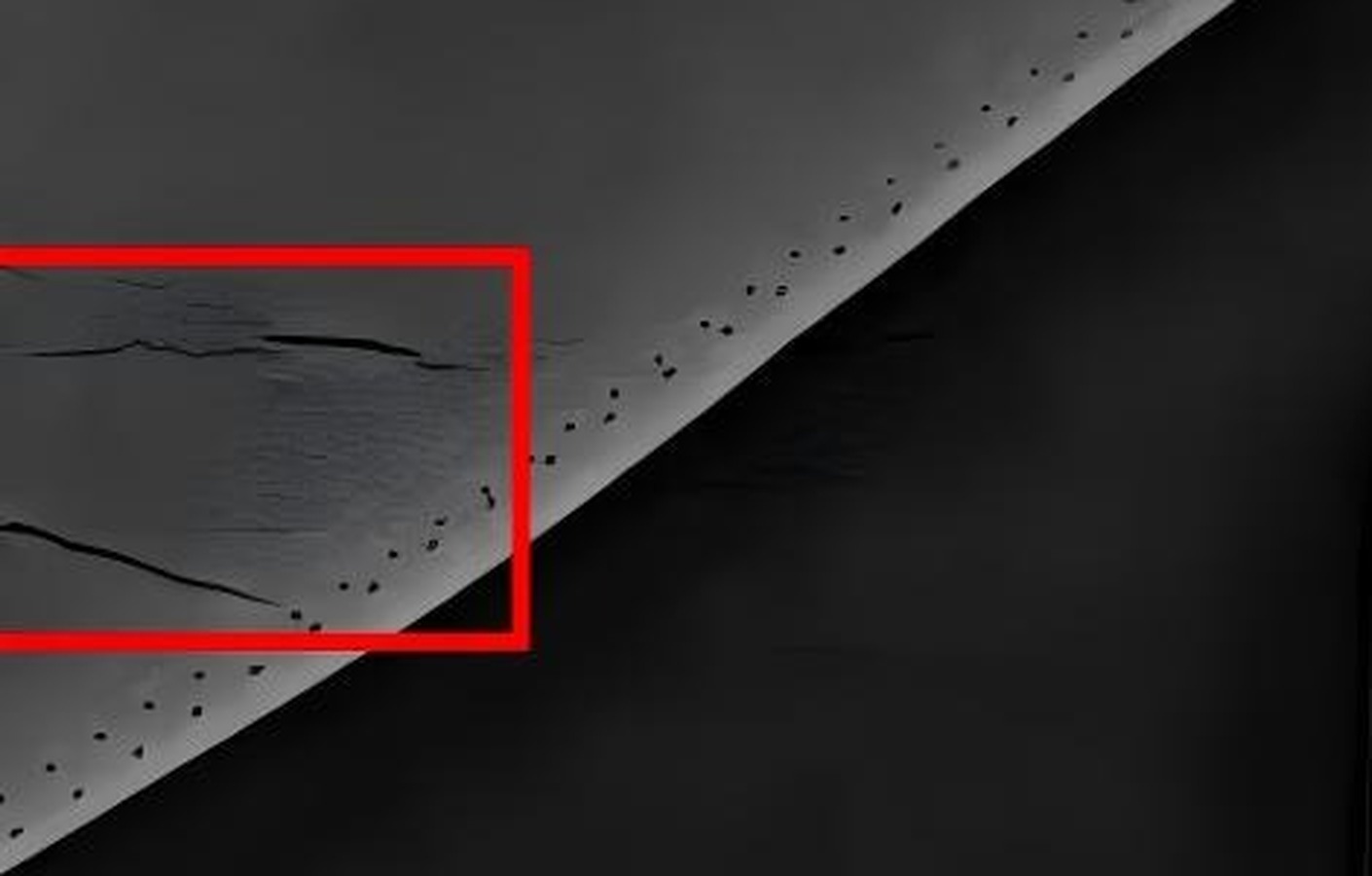
Incidentally, this is the practical version of the “check it once a year” line from issue 5. Any clinic with its own DR system can do this for free — once a year, ideally folded into the days when the equipment gets its annual inspection.
03What to do when you find something
One principle: look at where the crack is.
Cracks over the front of the torso
Anything over the thyroid, chest, abdomen or gonads — replace it, no hesitation. Issue 5 covered why: those are the highest-weighted organs, and covering them is the entire reason the apron exists.
Cracks at the edges or hem
Small cracks away from critical areas can be demoted to spare use — but they must be labelled, so nobody grabs one off the rail assuming it is sound.
Condemnation criteria vary between standards; when in doubt ask your inspection body or follow the manufacturer’s instructions. But “cracked over a critical area means replace” is not controversial anywhere.
04More important than checking: making them last
① Hang them; never fold them
Use a proper apron hanger so the load sits on the shoulders, like a coat. No hanger? Lying flat still beats folded.
② Do not sit in them, press them, or drape them over a chair
Sitting down in an apron creases it across the waist; draping it over a chair back creases the shoulder line. Both happen daily, and both are the easiest habits to change.
③ Wipe them clean; never machine wash
A damp cloth and a neutral detergent is all it takes. Machine washing and direct sunlight both accelerate ageing — one cycle can cost the apron a year of life.
Aprons are not cheap, and they fail out of sight. These three habits cost nothing and matter more than buying new ones.
Once a year is enough for this. But clinics doing it for the first time usually find something.
An apron fails on the inside, where you cannot see it.
Image it once a year; hang it, never fold it.
Source:Imaging aprons to check for cracks is standard practice; inspection intervals and condemnation criteria should follow local radiation-protection requirements and the manufacturer’s instructions. The images here are radiographs of a real apron with facility information removed; no apron brand is evaluated. Cracks may appear darker or brighter: a split leaving a gap reads darker, while material bunched at a torn edge reads brighter, so the test is non-uniformity rather than a particular shade.
IWA Medical · We build DR systems and write our own core software
Questions about veterinary DR imaging? Technical questions go straight to our engineers.