
That Instant Inside the Tube: What Happens After Electrons Hit the Target
Why does the machine say “please wait”? Why is the tube a consumable? What do kV and mA each control? It starts at the instant electrons strike the target.
 Veterinary imaging · Core software built in-house
That Instant Inside the Tube:
What Happens After Electrons Hit the Target
Why does the machine say “please wait”? Why is the tube a consumable? What exactly do kV and mA each control? It all starts at the instant electrons strike the target.
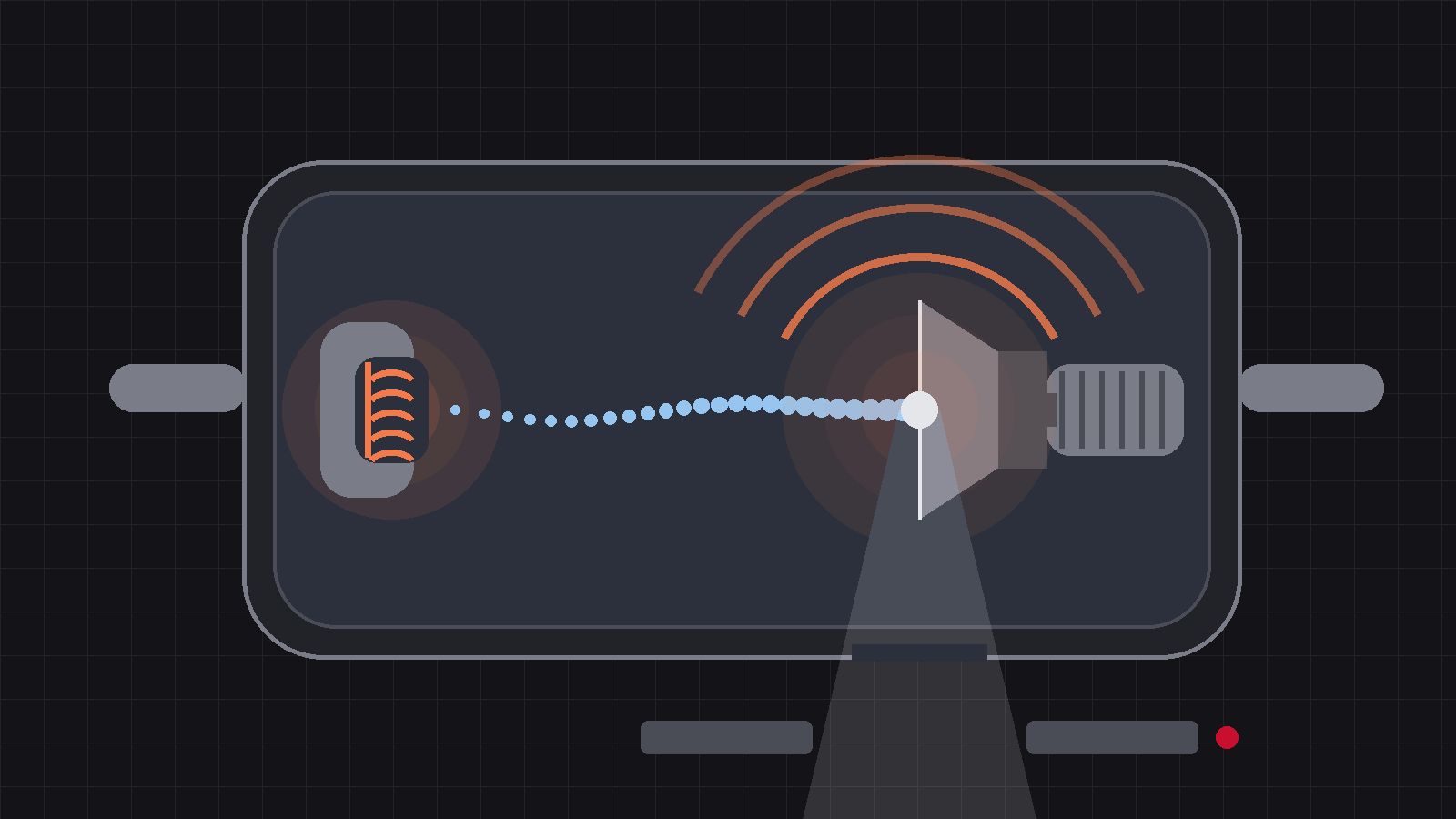
What happens inside the tube in the instant you press the hand switch? It sounds like a physics lecture, but knowing it explains three things you meet every working day: why the machine tells you to wait, why the tube is a consumable, and why kV and mA each control one thing and cannot be mixed up.
01There are only two things inside the tube: a filament and a target
An X-ray tube is an evacuated envelope — glass or metal — containing just two things: a filament and a target. Press the hand switch and three events follow within a few thousandths of a second.
The filament glows and releases electrons
Current heats the filament until electrons “boil off” its surface and gather as a cloud around it. The hotter the filament, the more electrons.
High voltage drives them into the target
Tens of thousands of volts across filament and target accelerate the electrons hard. Higher voltage, faster electrons, heavier impact.
Step 3: electrons hit the target and X-rays appear — but only a trace
The target is usually tungsten: hard and heat-resistant. On impact, the electrons’ energy splits two ways: more than 99% becomes heat, less than 1% becomes X-rays. That trace leaves through the tube window, passes the filter that removes useless soft radiation, then the collimator that limits the field — and only then is it the beam that reaches the animal.
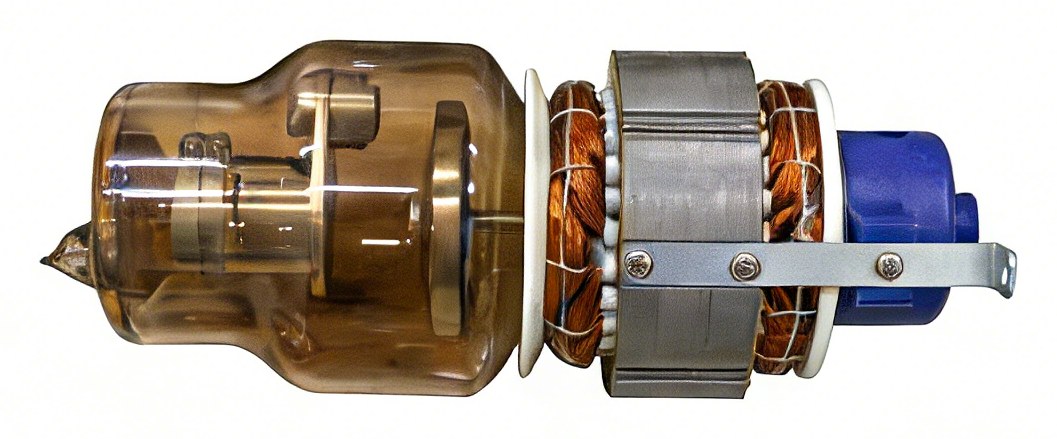
02Put plainly: an X-ray tube is a heater
99% of its output is heat; the X-rays are a by-product
You read that correctly. What we pay for is the 1%, yet almost all the energy ends up as heat piled onto the target. That is why much of a tube’s design is about getting rid of heat: the anode rotates (that whirr at start-up is the rotor) so the impact point is spread around a whole track, and insulating oil and the housing carry the heat away. Once you accept this, most of the machine’s “moods” start to make sense.
The share of electron energy that actually becomes X-rays; the rest is heat. This single fact explains both the waiting prompt during rapid sequences and the finite life of the tube.
03With those three steps, four everyday things make sense
Why rapid exposures trigger “please wait”
Because 99% of the energy becomes heat, all of it on the target. Continuous exposures — especially large animals at high mAs — raise the target temperature fast. The machine keeps a heat-capacity account and makes you wait once the limit is reached. That is not a fault; it is protection. Forcing exposures is burning the tube.
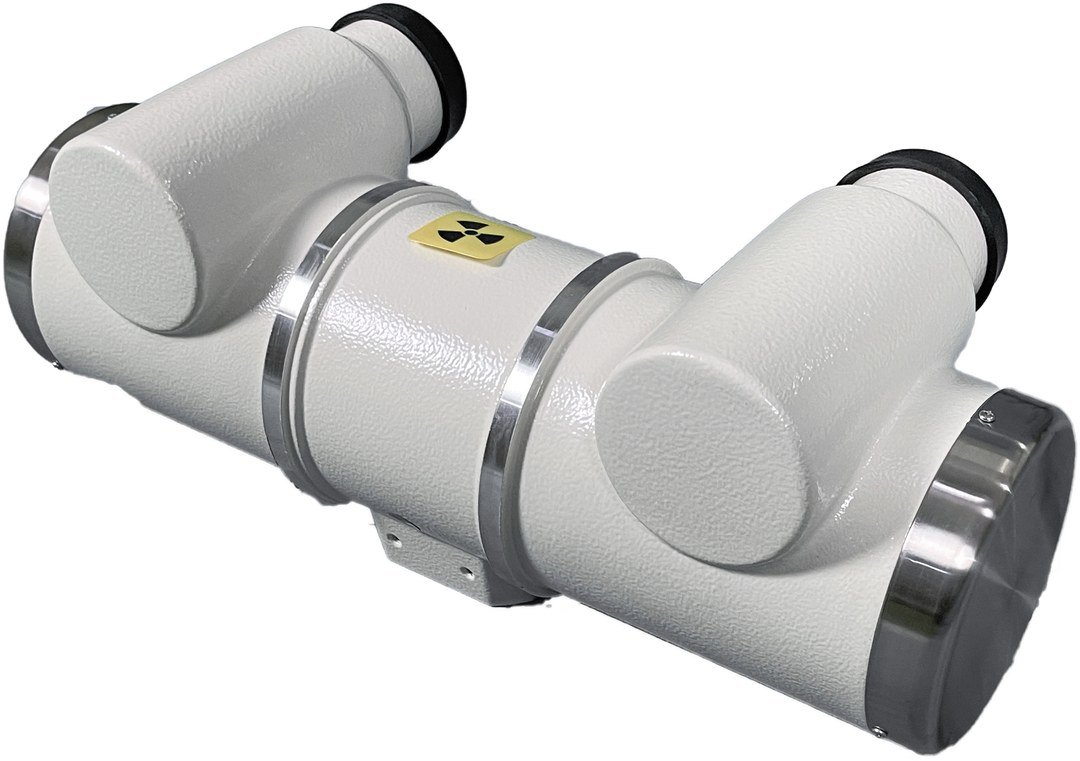
Why the tube needs warming up
A cold target that suddenly takes a large load can crack. Warm-up exposures raise its temperature gradually — the same reason you do not pour boiling water into a cold glass.
Why the tube is a consumable
Every heating cycle evaporates a little filament; every impact roughens the focal track. After some years the filament fails and the target surface pits. Like a tyre, it has a service life: the harder it works, the sooner it is replaced.
Why there is a large and a small focal spot
The small area where electrons land is the focal spot. A small spot gives sharper images (less geometric blur); a large spot takes more heat and suits large animals and high output.
That size is not arbitrary: a tube normally carries two filaments of different sizes — light the fine one and you get the small focal spot, the thick one and you get the large one. So pressing “large/small focus” on the console really means switching filaments, which takes us straight back to Step 1. Choosing between them is the trade-off between sharpness and heat capacity.
None of the three costs anything, and together they add life to the tube.
The tube is 99% heater, 1% X-ray lamp.
Let it rest.
Source:“Under 1% of electron energy becomes X-rays, the rest becomes heat” is the standard result of radiation physics in the diagnostic kV range.
IWA Medical · We build DR systems and write our own core software
Questions about veterinary DR imaging? Technical questions go straight to our engineers.