
Inspiration or Expiration: Breathing Phase, Explained Once
Why end-inspiration for the chest and end-expiration for the abdomen? How to catch that pause on a living animal — and what to do when the patient is panting, anaesthetised, or sedated.
 Veterinary imaging · Core software built in-house
Inspiration or Expiration:
Breathing Phase, Explained Once
Why end-inspiration for the chest and end-expiration for the abdomen? How do you catch that pause on a living animal? And what to do when the patient is panting, anaesthetised, or sedated.
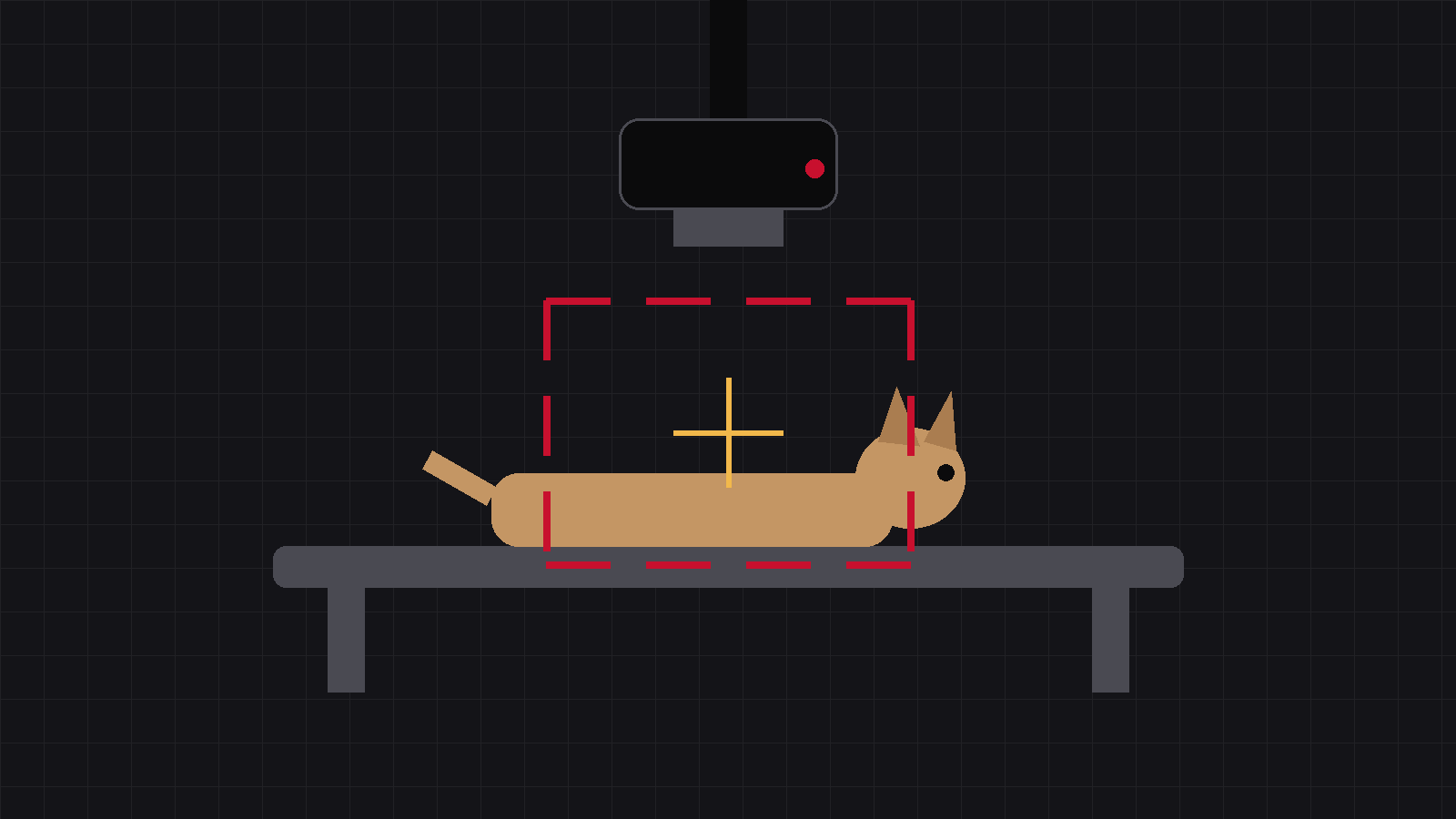
When we covered chest radiographs we said “end-inspiration”; for the abdomen we said “end-expiration”. Readers asked: can you settle it once and for all — when exactly do you press? We can. One article.
01There is only one rule
Put whatever you want to see in the state where it looks its best. Chest and abdomen give opposite answers, and both follow from this one rule.
Darkest lungs, no false big heart
On inspiration the lungs fill with air. Air is black on a radiograph, so the lung fields are at their darkest and contrast with the vascular markings is strongest; the lungs are expanded, the heart looks relatively small, and the diaphragm is flattened. That is the standard state for assessing lungs and heart.
Roomiest abdomen, organs uncrowded
On expiration the diaphragm moves forward and the abdominal cavity is at its roomiest — organs spread out without crowding. On inspiration the diaphragm presses backwards, pushing liver and stomach caudally; the abdomen gets cramped and organs pile on top of each other.
Shoot the chest on expiration instead and the lung fields turn whiter and denser, the cardiac silhouette looks bigger, the diaphragm domes higher — all three look exactly like disease, and all three are fake. Many false calls of “something in the lungs” or “big heart” are really just an expiratory-phase chest film.
02Catching that moment on a living animal
Watch the chest wall (chest films) or the abdominal wall (abdominal films) rise and fall: end-inspiration = maximum rise, with a very short pause; end-expiration = the lowest point, also with a pause. Press on the pause.
Never press mid-swing — that is when motion is fastest, and the edges will always blur.
03Three situations, three answers
The panting patient: wait
Give it a minute or two to settle before you shoot. If a pause never comes, keeping the animal still takes priority; phase comes second.
The anaesthetised patient: you control the breathing
For a chest film the anaesthetist can give one gentle positive-pressure breath, and you expose at the peak of inflation — this is where the most textbook chest radiographs come from.
Sedated but breathing on its own: the easiest catch
Respiration is slow and deep, the pauses are obvious — the easiest moment to hit.
04The other half of phase: short exposures back you up
Short exposures back you up
Even if your timing is slightly off, an exposure time short enough keeps the motion smear small. It is the machine’s insurance policy for your technique — but insurance is not a substitute. Timing still comes first.
Repeat it a few times and your hand will know the moment before your head does.
Chest on end-inspiration, abdomen on end-expiration;
wait for the pause, then press.
Source:This article covers hands-on technique; no external data are cited.
IWA Medical · We build DR systems and write our own core software
Questions about veterinary DR imaging? Technical questions go straight to our engineers.